
Imperial County Court Records After a Jail Arrest
After an arrest in Imperial County, the first record is usually a sheriff, city police, CHP, or other agency custody record. The person may be processed through the Imperial County Regional Adult Detention Facility for intake, classification, medical screening, and initial custody decisions. That jail record can show the arrest basis, warrant information, booking details, and release status if the information is legally releasable. It is not the same as the court record that controls the criminal case.
The court record starts when the Imperial County District Attorney files a criminal complaint or other charging document in the Superior Court of California, County of Imperial. The filed case may show different charges than the jail booking because prosecutors can decline counts, add counts, amend a charge, reduce the level of an offense, or dismiss a count later. Use jail inmate records when the question is custody, housing, booking, or release. Use jail mugshots for booking photo rules and records requests. Use the court record for formal charges, case number, hearings, bail minutes, disposition, and conviction or dismissal status.
How to Find Imperial County Court Records After an Arrest
The primary online starting point for filed criminal cases is the Imperial Superior Court public portal. The court also publishes a case-search information page and a criminal division page. These are court systems, not a live jail roster. A newly booked person may be in sheriff custody before the District Attorney files a case and before the portal shows a court record.
- Confirm custody first if the arrest is recent. Call the Imperial County jail main number at (442) 265-2220 if the question is whether the person is booked or housed at a county facility.
- Open the Imperial Superior Court public portal and search by defendant name when no case number is known.
- Use a case number, citation number, or filing date range if those details are available from court paperwork or a lawful source.
- Open the criminal case and record the case number, filing date, party name, charge descriptions, statutes, bail or release minutes, hearing dates, and disposition.
- If the case does not appear, contact the criminal clerk for older cases, sealed matters, juvenile matters, or files that are not available through the public portal.
California Department of Justice criminal-history records are not open public name-search records for general browsing. For most public searches after an Imperial County arrest, the practical chain is sheriff custody information, the Imperial Superior Court case portal after filing, and a Public Records Act request for releasable sheriff records when online access does not answer the question.
The Imperial court portal is the relevant online source for filed criminal case records after an arrest. The screenshot comes from the Imperial Superior Court public portal.
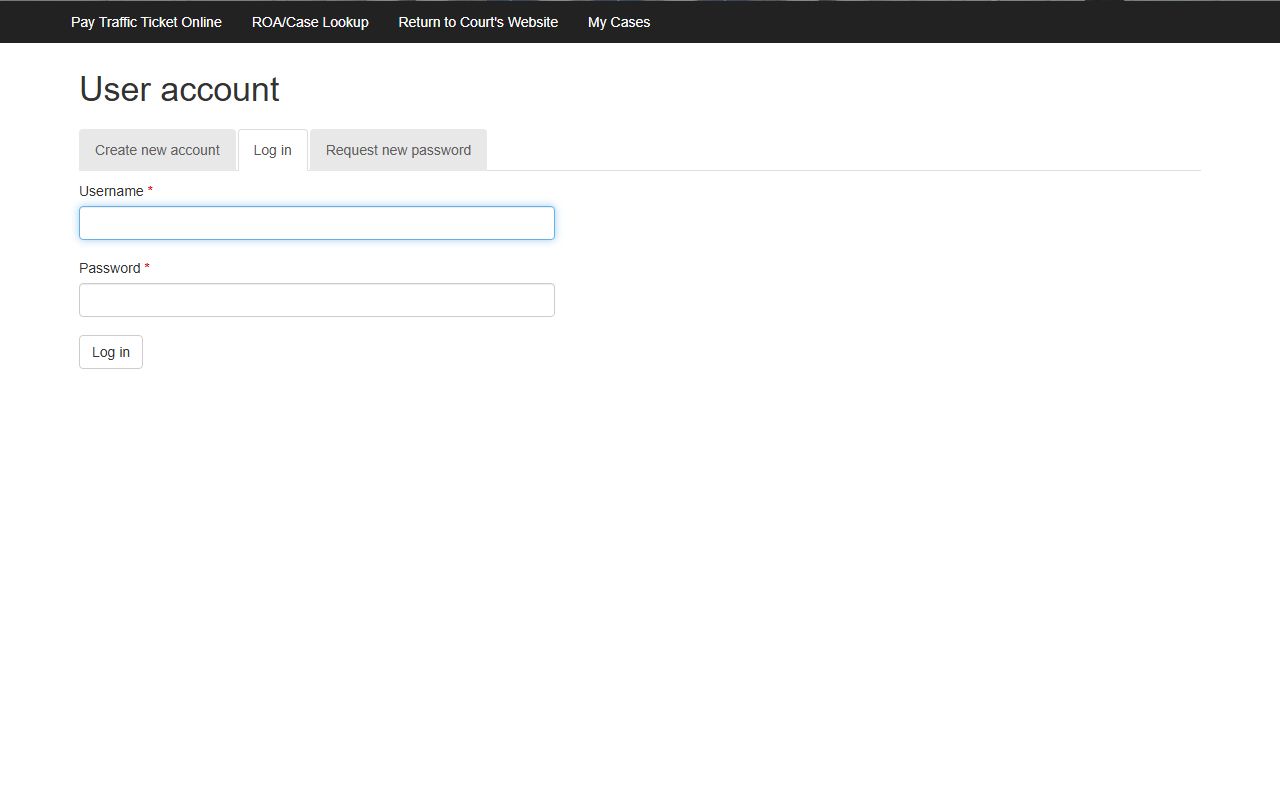
Use the court portal for filed charges and case status, then compare those court records with any jail booking information obtained from the Sheriff's Office.
| Portal Field | Type | Required | How It Helps |
|---|---|---|---|
| Case Number | Text | Optional | Best when a complaint, citation, notice, or court minute order already gives the case number. |
| Party Name | Text | Optional | Search the defendant's last name and first name. Use extra identifiers only from lawful sources. |
| Citation / Ticket Number | Text | Optional if exposed | May help with traffic-related criminal matters or cases that began with a citation. |
| Date Range | Date | Optional | Use an arrest date, filing date, or hearing window to narrow common-name results. |
| Search / Reset | Button | Not applicable | The portal may require interactive steps or terms before showing results. |
How Court Charges Get Filed After an Arrest
A jail arrest is an allegation and custody event. The formal court record begins when a charging document is filed. In Imperial County state criminal cases, the Imperial County District Attorney decides whether to file, what charges to file, and whether the case should later be amended, reduced, dismissed, resolved by plea, or tried. This is why the arrest charge shown in a jail record can differ from the filed court charge.
| Complaint | Information | Indictment | |
|---|---|---|---|
| Filed By | Usually the prosecutor at the start of the criminal case. | The prosecutor after a preliminary hearing or waiver in many felony cases. | A grand jury accusation filed through the court. |
| Common For | Common first charging document in California criminal cases. | Felony cases that proceed beyond preliminary hearing stages. | Less common, but possible for serious or complex matters. |
| Starts or Advances | Creates the court case and formal charge record. | Supersedes or advances the felony charge record. | Begins the case through a grand jury process. |
| Why It Matters | Shows the charge the DA chose to file after reviewing the arrest. | Shows the charge after early felony screening and court review. | Shows a grand-jury charging route rather than the standard complaint path. |
Charge Status in Court Records After an Arrest
Charge status is one of the main reasons to use court records after a jail arrest. A booking record may show what an officer or agency used at intake, while the court record tracks the filed counts and the case outcome. Each count can move differently. One count may remain pending, another may be amended, another may be dismissed, and another may end in conviction.
| Status | What It Means |
|---|---|
| Pending | The count remains open and has not reached a final disposition. |
| Amended | The filed charge was changed by prosecution or court action. |
| Reduced | The charge level or offense was lowered, often as part of case screening, negotiation, or plea resolution. |
| Dismissed | The count ended without a conviction on that charge. |
| Convicted | A conviction was entered by plea, verdict, or other accepted disposition. |
| Deferred / Diversion | The case follows a court or prosecution path that may avoid conviction if the defendant completes conditions. |
Bail and Release in Court Records After Jail Arrest
Imperial County readers should separate custody from release conditions. The jail can often confirm whether a person is currently held and may be able to state whether bail has been set. The court record is where formal release conditions, bail minutes, hearing orders, and no-bail rulings appear after filing. California still permits licensed commercial bail agents, but not every case is bondable and not every listed amount means immediate release is available.
No official Imperial County sheriff bond-payment page or fee table was located in the captured research. Before posting money, call the jail at (442) 265-2220 or contact the Superior Court criminal division to confirm the current bail amount, payment location, accepted payment forms, and whether a hold, detainer, warrant, or court order blocks release.
| Release Type | How It Works |
|---|---|
| Cash Bail | The full bail amount is paid directly to secure court appearance. Confirm payment instructions with jail or court staff. |
| Surety Bond | A licensed California bail agent posts a bond for a premium. Case-specific restrictions can still apply. |
| Own Recognizance | The court releases the defendant on a promise to appear, sometimes with supervision or conditions. |
| No-Bail Order | Release is not available by payment because of the charge, risk finding, warrant, or court order. |
| Hold or Detainer | Another agency, probation, parole, immigration, federal authority, or another court blocks release even if bail appears in the case. |
Warrants, Arrest, and Imperial County Court Records
No official Imperial County Sheriff's active-warrant public search page was located during the research pass. Warrant questions should be handled through the issuing court, the arresting agency, or the sheriff's jail line when custody is involved. A bench warrant may appear in an Imperial Superior Court case after a missed hearing or violation of a court order. An arrest warrant may lead to booking at the county jail campus, after which jail custody and court case records should be checked separately.
Common warrant fields can include the name, case number, issuing court, charge or alleged violation, warrant date, bail amount, no-bail status, and agency. California does not provide a simple public statewide warrant portal equivalent to a county roster. Law-enforcement warrant systems are restricted, and releasable warrant or arrest information may require a request to the relevant agency under California public-records rules.
Charges vs. Convictions in Court Records After Arrest
An arrest and filed charge are not the same as a conviction. Court records after an Imperial County jail arrest may show accusations that were later dismissed, amended, reduced, or resolved without conviction. For accurate reading, look at each count and its disposition instead of treating the arrest or initial complaint as the final outcome.
| Charge | Conviction | |
|---|---|---|
| Stage | An accusation filed in court after arrest review. | A final outcome entered after plea, verdict, or accepted court disposition. |
| Proof Level | Based on filing standards and probable cause, not final guilt. | Requires proof beyond a reasonable doubt or a valid plea. |
| Record Meaning | Shows what was alleged at a point in the case. | Shows the count that resulted in a conviction. |
| Search Caution | Must be checked for later dismissal or amendment. | Must still be read with sentence, appeal, reduction, or relief information. |
Sealed vs. Expunged Arrest and Court Records
California law limits broad criminal-history dissemination and provides specific relief procedures for certain arrest records. Penal Code 851.8 allows a factually innocent person to petition for sealing and destruction of arrest records under specified conditions. Other California post-disposition relief may affect how a conviction is reported or used, but relief is not automatic for every arrest and does not erase every government record from every agency system.
| Sealed | Expunged / Dismissal Relief | |
|---|---|---|
| Public Visibility | Hidden from ordinary public access when the court or statute restricts the record. | May show dismissal or relief in the court record, depending on the statute and case type. |
| Agency Access | Law enforcement and courts may retain limited access where California law allows. | Some agencies may still see or use the record for legally allowed purposes. |
| California Example | Penal Code 851.8 can apply to factually innocent arrest-record sealing and destruction. | Post-conviction dismissal relief is separate from a finding that the arrest was factually innocent. |
| Practical Step | Review the court docket and any sealing order before relying on public search results. | Check the exact order, statute, and disposition rather than assuming the case disappeared. |
District Attorney Role in Court Records After Arrest
The Imperial County District Attorney prosecutes state criminal cases arising from arrests in Imperial County. The DA decides whether to file a criminal complaint after an arrest, what charges to file, and whether the filed charges should be amended, reduced, dismissed, or resolved through plea or trial. The official DA site identifies George Marquez as Imperial County District Attorney.
The DA page is useful for understanding the prosecutor's role, victim-witness services, and office contact channels. The court record itself appears through the Superior Court of California, County of Imperial after charges are filed.
The prosecutor's office is separate from the jail and the court. The following screenshot comes from the Imperial County District Attorney website.

Use the DA site for prosecutor and victim-witness context, but use the court portal for the filed case and the Sheriff's Office for jail custody questions.
Restricted Court Records After an Arrest in Imperial County
Not every arrest-related record is public. The California Public Records Act gives access to disclosable records unless an exemption applies, and Government Code 7923.610 requires law-enforcement agencies to disclose specified contemporaneous arrest information such as name, physical description, arrest and booking times, factual circumstances, bail, release details, charges, and warrants. Government Code 7923.615 allows withholding when disclosure would endanger safety, compromise an investigation, or trigger other protected interests. Penal Code 13300 limits dissemination of criminal offender record information.
Juvenile matters, sealed charges, protected victim details, ongoing investigations, confidential law-enforcement records, and some dismissed or restricted matters may not appear online. If a public portal search returns no result, that does not prove no arrest happened and does not prove the person is clear of all court activity. It may mean the case has not been filed, is sealed, is too old for the portal, belongs to another jurisdiction, or must be requested through the clerk or agency that created the record.
Important: This resource is not a consumer reporting agency and cannot be used for employment, credit, housing, insurance, or any other FCRA-covered decision.